New Construction Plumbing Contractor: What Homeowners Should Know
With 9+ years of consecutive plumbing experience and a C-36 contractor license earned in July 2024, Jeremy Dudley built Brush Creek Plumbing around one idea: people deserve honest answers before they sign anything. If you're planning a new build in Sonoma County and trying to figure out what a new construction plumbing contractor in Sonoma County actually does, what it costs, and how to avoid getting burned, this article is for you. New construction plumbing is one of the most detail-heavy phases of any build, and the decisions made early — pipe materials, layout, rough-in placement — affect how your home functions for decades. You deserve straight answers, not a sales pitch.
This piece is structured as a plain FAQ because that's what first-time builders actually need. No filler, no scare tactics. Just the real questions people ask and honest answers grounded in the work Brush Creek Plumbing does every day across Sonoma County and the surrounding region.
What Does a New Construction Plumbing Contractor Actually Do From Start to Finish?
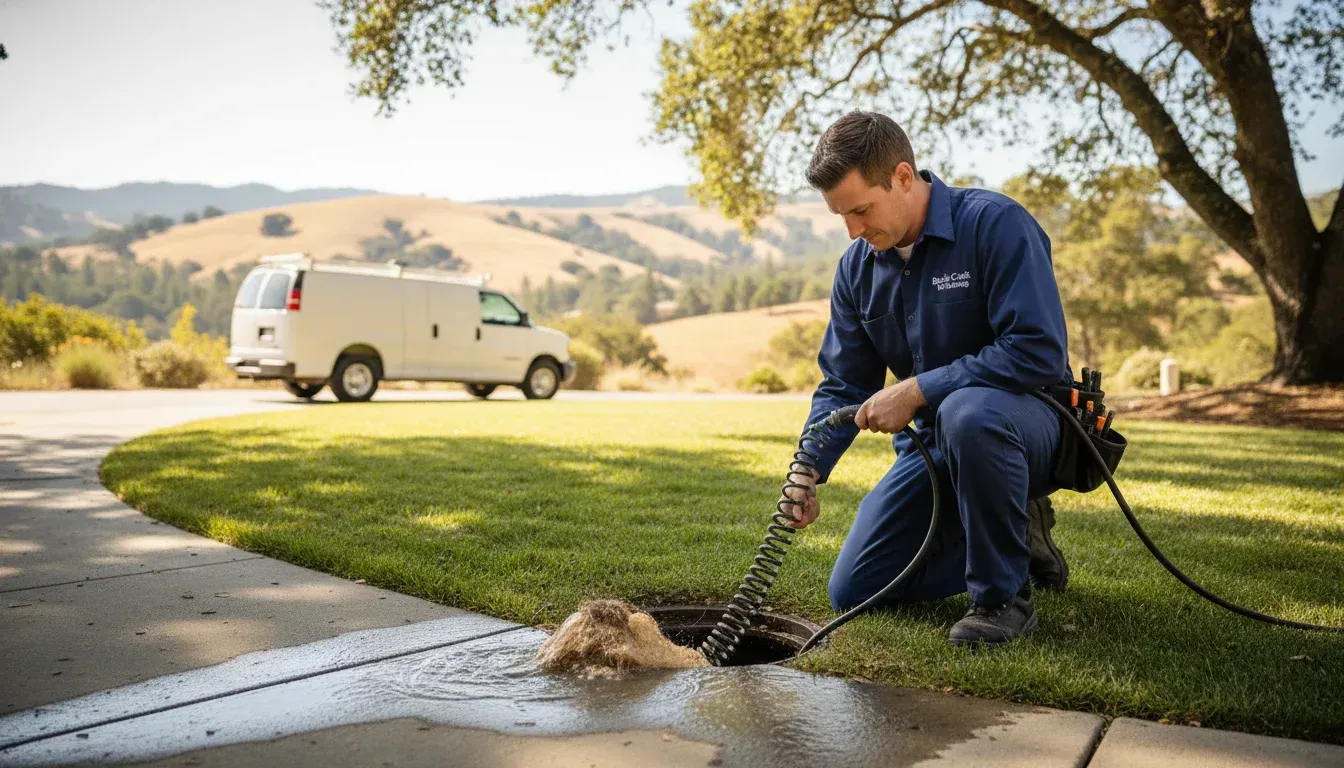
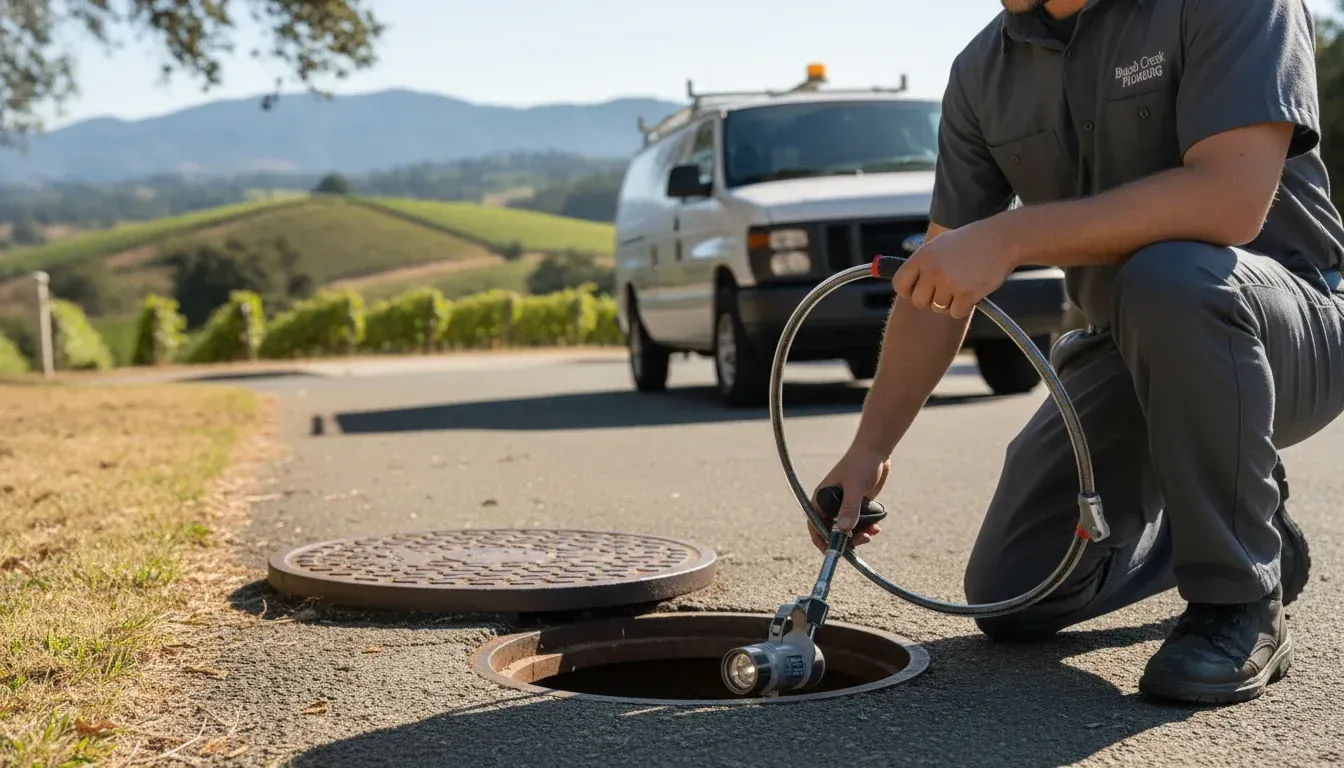
New construction plumbing happens in three main phases, and each one has to pass inspection before the next begins. Phase one is underground work — laying out the sewer and drain lines below the slab or crawl space before the foundation goes in. This is where your plumbing layout is locked in. Moving a drain line after concrete is poured is expensive and disruptive, so getting this phase right is non-negotiable.
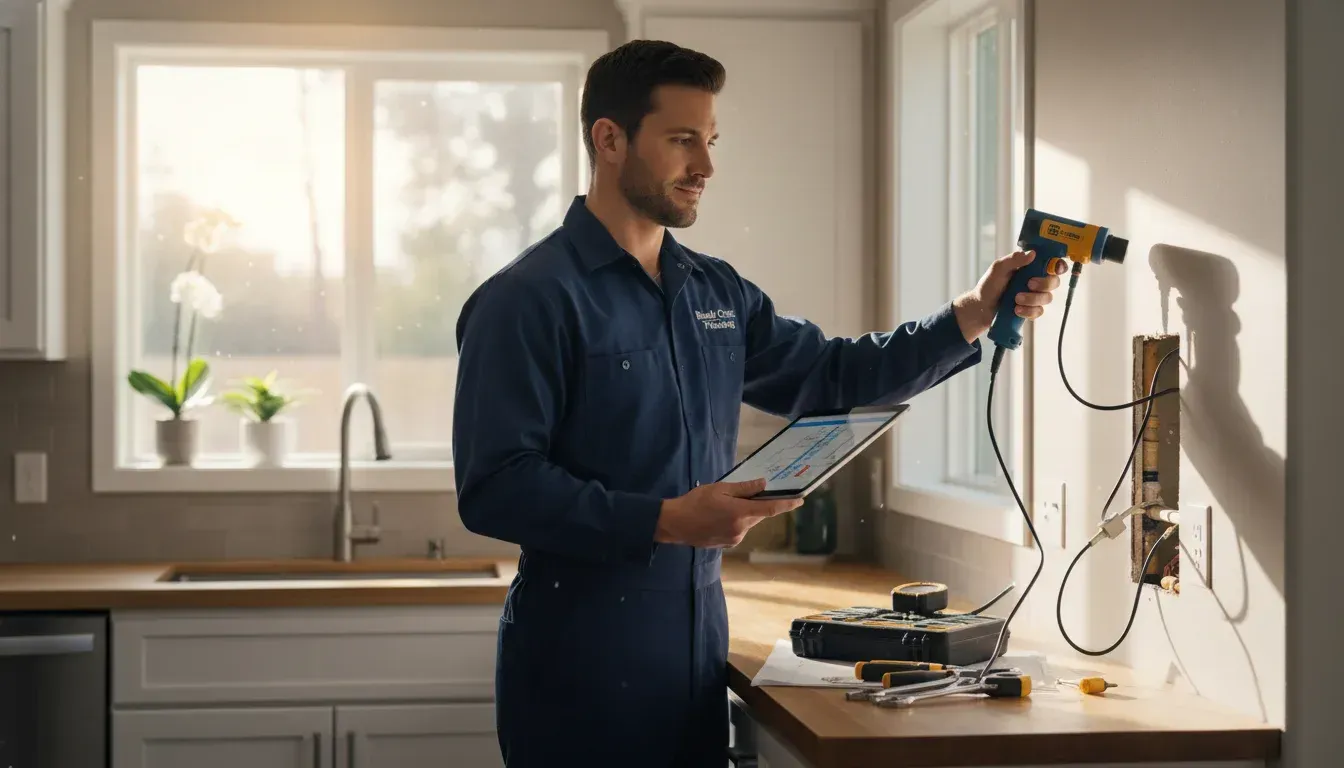
Phase two is rough-in. This is when your water supply lines, drain, waste, and vent pipes are run through the framing — before drywall goes up. Every shower valve, toilet flange, dishwasher connection, and hose bib location gets established here. An experienced plumber reads the architectural plans carefully during this phase and flags conflicts with other trades early. A plumber who just follows a plan without thinking ahead is one reason you end up with a vent stack in the middle of a kitchen cabinet opening.
Phase three is trim-out, or finish work. This is when fixtures are set — toilets, faucets, water heaters, and any specialty systems like whole-home filtration or recirculating hot water loops. This is also when final inspections happen and the home gets signed off for occupancy.
Brush Creek Plumbing handles all three phases, from sewer and septic to whole-house water service and gas lines. The breadth of that scope matters because it means you're not coordinating between two or three plumbing subs who each only do part of the job. One crew that understands how the whole system connects makes for cleaner work and fewer surprises at inspection.
In Sonoma County, where new residential construction often involves hillside lots, septic systems rather than municipal sewer, and propane gas service in unincorporated areas, having a plumber with wide-ranging knowledge across waste, water, and gas systems isn't optional — it's the foundation of a functional home.
What Should You Ask Before Hiring a Plumbing Contractor for Your New Build?
The most important question is simple: are they licensed? In California, anyone performing plumbing work on a new construction project needs a C-36 plumbing contractor license issued by the Contractors State License Board. This license requires demonstrated field experience, a background check, and passing a trade examination. If a contractor can't show you their C-36, they cannot legally do the work — full stop.
Beyond licensing, ask how long they've been doing new construction specifically. Service plumbing — fixing leaks, swapping water heaters — is different from ground-up construction plumbing. New builds require reading blueprints, coordinating with general contractors and framers, and understanding building codes at a level that service-only plumbers don't always carry. Jeremy Dudley has 9+ years of consecutive plumbing experience that spans new construction, remodels, and service work, which means he understands how decisions made in the underground phase affect the trim-out phase three months later.
Ask for references from other new construction projects. Ask how they handle code conflicts — situations where the plans don't match what the inspector wants. Ask what happens when something unexpected comes up mid-project. A contractor who gives you a vague answer or gets defensive is telling you something important about how they'll behave when things get complicated.
You can learn more about the full range of work Brush Creek handles at brushcreek-plumbing.com, including new construction, remodels, and service across Sonoma County, Napa County, Marin County, and Solano County.
One thing worth saying directly: there are contractors out there who will give you a low bid to win the job and hit you with change orders through every phase. That practice — pricing below market to win the work, then making it up later — is exactly what Brush Creek was built to push back against. You should get a transparent estimate up front, with a contractor who explains what's included and what isn't before you're locked in.
How Does Sonoma County's Building Code Affect New Construction Plumbing Timelines?
Sonoma County follows the California Plumbing Code, which is based on the Uniform Plumbing Code with state amendments. What that means practically is that every phase of your plumbing installation requires a separate inspection — underground, rough-in, and final. Each inspection has to be scheduled, passed, and signed off before the next trade phase can proceed.
Inspection scheduling in Sonoma County can add meaningful time to your project, particularly during busy building seasons. Missing an inspection window because the plumber wasn't ready means waiting days for the next available slot, which pushes your entire build schedule back. A plumber who regularly works in this county knows how to sequence their work so inspections happen on the first visit — not after a correction notice delays everything.
Septic systems add another layer of coordination. A significant portion of new construction in unincorporated Sonoma County involves private septic rather than municipal sewer connections, and septic design and installation involves the county's Environmental Health Division in addition to Building and Safety. Brush Creek Plumbing works with sewer and septic systems as a standard part of its new construction scope, not as an afterthought.
Water quality is also a local factor worth planning around. Sonoma County's water supply varies by zone — some areas are on municipal water with tested mineral content, others are on private wells with calcium, iron, or other particulates that shorten fixture and appliance life. Installing a whole-house filtration system during new construction is dramatically cheaper than retrofitting one later, and it's part of what Brush Creek routinely walks clients through during the planning phase.
What Does New Construction Plumbing Cost, and How Do You Know if a Quote Is Fair?
Plumbing costs on a new home vary based on square footage, number of bathrooms, fixture selections, whether the home connects to municipal sewer or requires a septic system, and whether gas lines are included. There is no single number that applies to every project, and any contractor who quotes you a flat price per square foot without reviewing your plans is giving you a guess, not an estimate.
That said, you can gauge whether a quote is reasonable by understanding what's included. A complete new construction plumbing bid should cover underground rough, above-ground rough, all supply and drain piping, gas lines to all appliances, fixture trim-out, water heater installation, and all required permits and inspections. If a bid leaves any of those items vague or "to be determined," ask for clarification before you sign.
Price gouging in the plumbing industry is real. It shows up most often in emergency service calls, but it also shows up in new construction when a contractor knows the homeowner is under time pressure to get a plumber locked in before their framing window closes. The tactic relies on the customer not knowing what fair market pricing looks like. The best defense is getting at least two or three detailed bids from licensed C-36 contractors who are willing to explain their line items.
Brush Creek Plumbing's approach is to be upfront about what work costs and why. The goal is for you to understand exactly what you're paying for — not to obscure scope so a low number wins the contract and change orders make up the difference later. That kind of transparency isn't complicated; it's just not universal in this industry.
Why First-Time Builders in Sonoma County Choose a Smaller, Owner-Led Plumbing Crew
There's a real difference between hiring a large plumbing company where you meet a salesperson and then a crew you've never talked to shows up on your job site, versus working with a small, owner-operated team where the person who gave you the quote is also the person doing the work.
Brush Creek Plumbing is a crew of three, including Jeremy. That size is intentional. It means accountability runs all the way through every job. When something needs to be checked, Jeremy is on site to check it. When you have a question about the gas line layout or the water heater location, you're talking to the person who made that call, not a project manager relaying messages.
For first-time builders, that direct line of communication matters more than most people expect going in. New construction has a lot of moving parts, and the jobs that go smoothly are the ones where each trade communicates clearly and catches problems before they become costly corrections. A small crew with an experienced owner leading the work brings that kind of focus to every phase.
The family-owned, community-minded approach Brush Creek is built on isn't a marketing line — it's a reflection of what a 30-year-old Napa native who genuinely loves this trade and this region cares about delivering. Sonoma County is home, and the work reflects that.
Your Next Step If You're Planning a New Build in Sonoma County
If you're in the early stages of a new construction project — still working through site plans, or already in the permit process — now is the right time to get a plumber involved. The earlier the conversation happens, the more influence you have over the layout, the materials, and the systems that will define how your home functions long after the job is done.
Jeremy Dudley holds a C-36 plumbing contractor license and brings more than 9 years of hands-on experience to every new construction project. His commitment is straightforward: give you honest information, fair pricing, and quality work you'd be comfortable recommending to your neighbor. Brush Creek Plumbing serves Sonoma County and the broader North Bay region, including Napa County, Marin County, and Solano County — and the crew is ready to talk through your project whenever you are. Reach out at brushcreekplumbing@gmail.com or call 707-931-9481. A home built right starts with a plumber who treats it like their own family's.
With 9+ years of consecutive plumbing experience and a C-36 contractor license earned in July 2024, Jeremy Dudley built Brush Creek Plumbing around one idea: people deserve honest answers before they sign anything. If you're planning a new build in Sonoma County and trying to figure out what a new construction plumbing contractor in Sonoma County actually does, what it costs, and how to avoid getting burned, this article is for you. New construction plumbing is one of the most detail-heavy phases of any build, and the decisions made early — pipe materials, layout, rough-in placement — affect how your home functions for decades. You deserve straight answers, not a sales pitch.
This piece is structured as a plain FAQ because that's what first-time builders actually need. No filler, no scare tactics. Just the real questions people ask and honest answers grounded in the work Brush Creek Plumbing does every day across Sonoma County and the surrounding region.
What Does a New Construction Plumbing Contractor Actually Do From Start to Finish?
New construction plumbing happens in three main phases, and each one has to pass inspection before the next begins. Phase one is underground work — laying out the sewer and drain lines below the slab or crawl space before the foundation goes in. This is where your plumbing layout is locked in. Moving a drain line after concrete is poured is expensive and disruptive, so getting this phase right is non-negotiable.
Phase two is rough-in. This is when your water supply lines, drain, waste, and vent pipes are run through the framing — before drywall goes up. Every shower valve, toilet flange, dishwasher connection, and hose bib location gets established here. An experienced plumber reads the architectural plans carefully during this phase and flags conflicts with other trades early. A plumber who just follows a plan without thinking ahead is one reason you end up with a vent stack in the middle of a kitchen cabinet opening.
Phase three is trim-out, or finish work. This is when fixtures are set — toilets, faucets, water heaters, and any specialty systems like whole-home filtration or recirculating hot water loops. This is also when final inspections happen and the home gets signed off for occupancy.
Brush Creek Plumbing handles all three phases, from sewer and septic to whole-house water service and gas lines. The breadth of that scope matters because it means you're not coordinating between two or three plumbing subs who each only do part of the job. One crew that understands how the whole system connects makes for cleaner work and fewer surprises at inspection.
In Sonoma County, where new residential construction often involves hillside lots, septic systems rather than municipal sewer, and propane gas service in unincorporated areas, having a plumber with wide-ranging knowledge across waste, water, and gas systems isn't optional — it's the foundation of a functional home.
What Should You Ask Before Hiring a Plumbing Contractor for Your New Build?
The most important question is simple: are they licensed? In California, anyone performing plumbing work on a new construction project needs a C-36 plumbing contractor license issued by the Contractors State License Board. This license requires demonstrated field experience, a background check, and passing a trade examination. If a contractor can't show you their C-36, they cannot legally do the work — full stop.
Beyond licensing, ask how long they've been doing new construction specifically. Service plumbing — fixing leaks, swapping water heaters — is different from ground-up construction plumbing. New builds require reading blueprints, coordinating with general contractors and framers, and understanding building codes at a level that service-only plumbers don't always carry. Jeremy Dudley has 9+ years of consecutive plumbing experience that spans new construction, remodels, and service work, which means he understands how decisions made in the underground phase affect the trim-out phase three months later.
Ask for references from other new construction projects. Ask how they handle code conflicts — situations where the plans don't match what the inspector wants. Ask what happens when something unexpected comes up mid-project. A contractor who gives you a vague answer or gets defensive is telling you something important about how they'll behave when things get complicated.
You can learn more about the full range of work Brush Creek handles at brushcreek-plumbing.com, including new construction, remodels, and service across Sonoma County, Napa County, Marin County, and Solano County.
One thing worth saying directly: there are contractors out there who will give you a low bid to win the job and hit you with change orders through every phase. That practice — pricing below market to win the work, then making it up later — is exactly what Brush Creek was built to push back against. You should get a transparent estimate up front, with a contractor who explains what's included and what isn't before you're locked in.
How Does Sonoma County's Building Code Affect New Construction Plumbing Timelines?
Sonoma County follows the California Plumbing Code, which is based on the Uniform Plumbing Code with state amendments. What that means practically is that every phase of your plumbing installation requires a separate inspection — underground, rough-in, and final. Each inspection has to be scheduled, passed, and signed off before the next trade phase can proceed.
Inspection scheduling in Sonoma County can add meaningful time to your project, particularly during busy building seasons. Missing an inspection window because the plumber wasn't ready means waiting days for the next available slot, which pushes your entire build schedule back. A plumber who regularly works in this county knows how to sequence their work so inspections happen on the first visit — not after a correction notice delays everything.
Septic systems add another layer of coordination. A significant portion of new construction in unincorporated Sonoma County involves private septic rather than municipal sewer connections, and septic design and installation involves the county's Environmental Health Division in addition to Building and Safety. Brush Creek Plumbing works with sewer and septic systems as a standard part of its new construction scope, not as an afterthought.
Water quality is also a local factor worth planning around. Sonoma County's water supply varies by zone — some areas are on municipal water with tested mineral content, others are on private wells with calcium, iron, or other particulates that shorten fixture and appliance life. Installing a whole-house filtration system during new construction is dramatically cheaper than retrofitting one later, and it's part of what Brush Creek routinely walks clients through during the planning phase.
What Does New Construction Plumbing Cost, and How Do You Know if a Quote Is Fair?
Plumbing costs on a new home vary based on square footage, number of bathrooms, fixture selections, whether the home connects to municipal sewer or requires a septic system, and whether gas lines are included. There is no single number that applies to every project, and any contractor who quotes you a flat price per square foot without reviewing your plans is giving you a guess, not an estimate.
That said, you can gauge whether a quote is reasonable by understanding what's included. A complete new construction plumbing bid should cover underground rough, above-ground rough, all supply and drain piping, gas lines to all appliances, fixture trim-out, water heater installation, and all required permits and inspections. If a bid leaves any of those items vague or "to be determined," ask for clarification before you sign.
Price gouging in the plumbing industry is real. It shows up most often in emergency service calls, but it also shows up in new construction when a contractor knows the homeowner is under time pressure to get a plumber locked in before their framing window closes. The tactic relies on the customer not knowing what fair market pricing looks like. The best defense is getting at least two or three detailed bids from licensed C-36 contractors who are willing to explain their line items.
Brush Creek Plumbing's approach is to be upfront about what work costs and why. The goal is for you to understand exactly what you're paying for — not to obscure scope so a low number wins the contract and change orders make up the difference later. That kind of transparency isn't complicated; it's just not universal in this industry.
Why First-Time Builders in Sonoma County Choose a Smaller, Owner-Led Plumbing Crew
There's a real difference between hiring a large plumbing company where you meet a salesperson and then a crew you've never talked to shows up on your job site, versus working with a small, owner-operated team where the person who gave you the quote is also the person doing the work.
Brush Creek Plumbing is a crew of three, including Jeremy. That size is intentional. It means accountability runs all the way through every job. When something needs to be checked, Jeremy is on site to check it. When you have a question about the gas line layout or the water heater location, you're talking to the person who made that call, not a project manager relaying messages.
For first-time builders, that direct line of communication matters more than most people expect going in. New construction has a lot of moving parts, and the jobs that go smoothly are the ones where each trade communicates clearly and catches problems before they become costly corrections. A small crew with an experienced owner leading the work brings that kind of focus to every phase.
The family-owned, community-minded approach Brush Creek is built on isn't a marketing line — it's a reflection of what a 30-year-old Napa native who genuinely loves this trade and this region cares about delivering. Sonoma County is home, and the work reflects that.
Your Next Step If You're Planning a New Build in Sonoma County
If you're in the early stages of a new construction project — still working through site plans, or already in the permit process — now is the right time to get a plumber involved. The earlier the conversation happens, the more influence you have over the layout, the materials, and the systems that will define how your home functions long after the job is done.
Jeremy Dudley holds a C-36 plumbing contractor license and brings more than 9 years of hands-on experience to every new construction project. His commitment is straightforward: give you honest information, fair pricing, and quality work you'd be comfortable recommending to your neighbor. Brush Creek Plumbing serves Sonoma County and the broader North Bay region, including Napa County, Marin County, and Solano County — and the crew is ready to talk through your project whenever you are. Reach out at brushcreekplumbing@gmail.com or call 707-931-9481. A home built right starts with a plumber who treats it like their own family's.
Table of Contents